Linkage between HLA genotypes and COVID-19 susceptibility, severity and mortality-A Systematic Review
Keywords:
COVID-19, SARS-COVID 2, Human Leukocyte Antigen, HLAAbstract
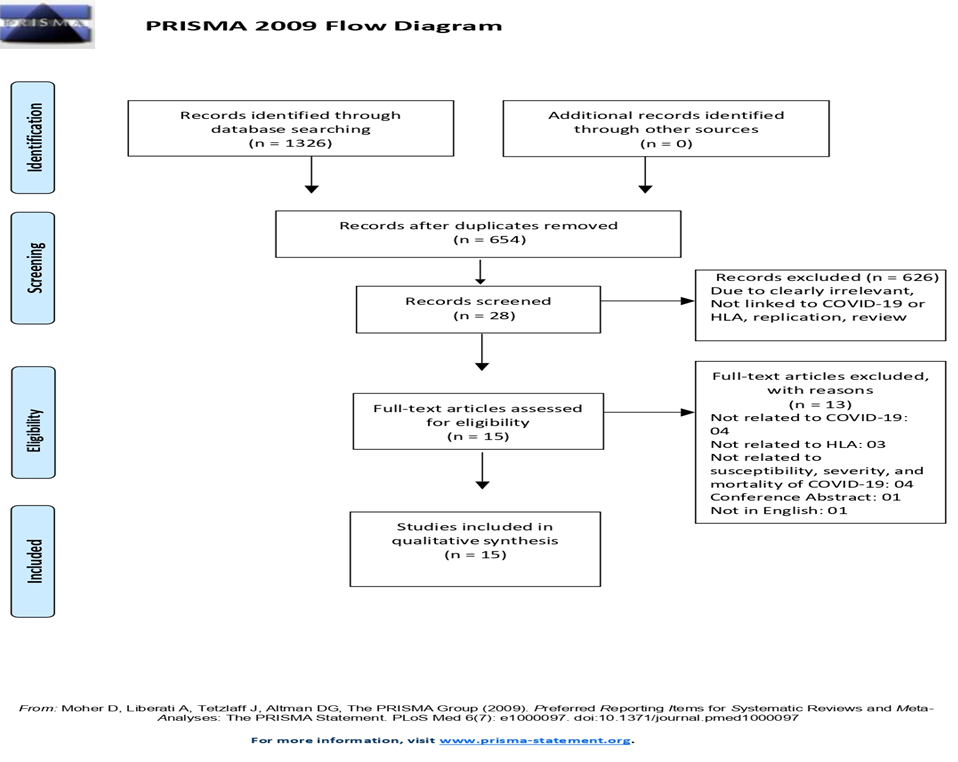
HLA is vital for effective immune responses against viruses. The virus responsible for COVID-19, SARS-CoV-2, highlights the significance of this immune response. The unpredictable nature of COVID-19 prompts investigation into how HLA, a component of host genetics, impacts disease susceptibility and outcomes. Understanding HLA variants' influence on COVID-19 susceptibility and severity can aid in identifying at-risk individuals. Significant HLAs that had been previously investigated for their association with COVID-19 were sought. Articles from January 2001 to February 2022 were reviewed in 2 databases: Science Direct and PubMed, employing the search terms "COVID-19" AND "HLA." Studies of genetic association measuring the severity or susceptibility to COVID-19 were analyzed in accordance with PRISMA guidelines. A total of 1326 studies related to the novel coronavirus and HLA conducted between the first month of 2001 and the second month of 2022 were identified in our search. Following the screening process, 15 relevant publications were selected. With the exception of one publication that did not demonstrate any connection, significant correlations between the incidence and mortality due to COVID-19 were found in all investigations. In severe cases, HLA class II, DRB113, was notably more prevalent. Among Black hospitalized patients positive for HLA-B53, there was an observed 7.4-fold higher risk of mortality, while HLA-B51:01 and HLA-A*26:01 were indicative of protective effects. HLAs play an essential role in immunological responses, potentially contributing to varying COVID-19 infection rates and outcomes across populations. These findings underscore the need for national networks to collect patient samples for HLA typing, identifying HLA genotypes associated with disease vulnerability.
Downloads